



How to Build a Speed Testing Protocol for Team Sport Athletes
Team sport speed testing should reflect the demands of the sport without pretending the field is a laboratory.
Most team sport athletes need acceleration, repeatable speed, and enough max velocity exposure to stay prepared. The protocol should measure those qualities clearly and fit inside training.
It does not need to be complicated.
Start with the sport demand
A soccer winger, football receiver, rugby back, and hockey athlete do not express speed in the same way.
Still, most team sport programs need answers to similar questions. How well does the athlete accelerate? Can the athlete reach high speed? Can the athlete repeat speed under fatigue? Is the athlete progressing after injury?
The protocol should match the question.
Use acceleration splits
Acceleration is often the most relevant speed quality in team sports. Useful options include 5m, 10m, and 20m.
Short splits help coaches see whether an athlete is improving the first steps, not just the final time. These distances are especially useful for soccer, football, rugby, lacrosse, and court-sport preparation.
Include controlled max velocity exposure
Team sport athletes still need high-speed exposure. A flying sprint can help coaches confirm whether an athlete is reaching meaningful speed in a controlled setting. It can also help return-to-play staff progress athletes beyond short acceleration work.
The protocol should not force track volume into team sport training. It should give enough information to support speed development and readiness.
Add repeated sprint context when needed
Some athletes need to show repeatability, not only peak output. Repeated sprint testing may include fixed rest intervals, limited reps, drop-off tracking, best rep, and average rep.
This is useful when the sport demands repeated efforts. It should be programmed carefully so fatigue does not distort every result.
Keep the protocol short
A practical team sport protocol might include 10m acceleration, 20m acceleration, flying split, and optional repeated sprint set.
Not every athlete needs every test every time. The best protocol is the one coaches can repeat consistently.
Where Freelap fits
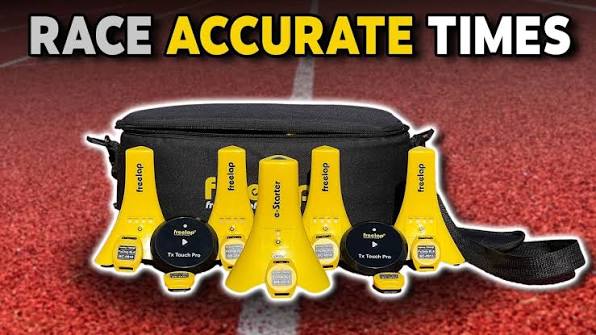
Freelap supports team sport speed testing because it allows coaches to collect split times without building a full event-style timing setup. This is useful when testing multiple athletes during limited training time.
The system fits controlled acceleration and speed testing. Coaches should still design the protocol around the sport and the training phase.
Practical recommendation
Build the protocol from three layers: acceleration split, max velocity exposure, and repeatability if the sport requires it.
Keep the setup consistent and the data tied to decisions.
Common Questions:
What speed tests should team sport athletes use?
Team sport athletes often benefit from 5m, 10m, and 20m acceleration tests, controlled flying splits, and repeated sprint testing when relevant.
Is a 40-yard dash useful for all team sport athletes?
It can be useful in some contexts, especially football, but many team sport athletes need shorter acceleration splits and sport-specific speed exposure.
How do coaches test acceleration in team sports?
Coaches test acceleration by timing short distances such as 5m, 10m, and 20m with a consistent start protocol and repeatable setup.


Share:
How to Improve Reaction Time for Sports
How to Measure Reaction Time in Athletes