
What is reaction time?
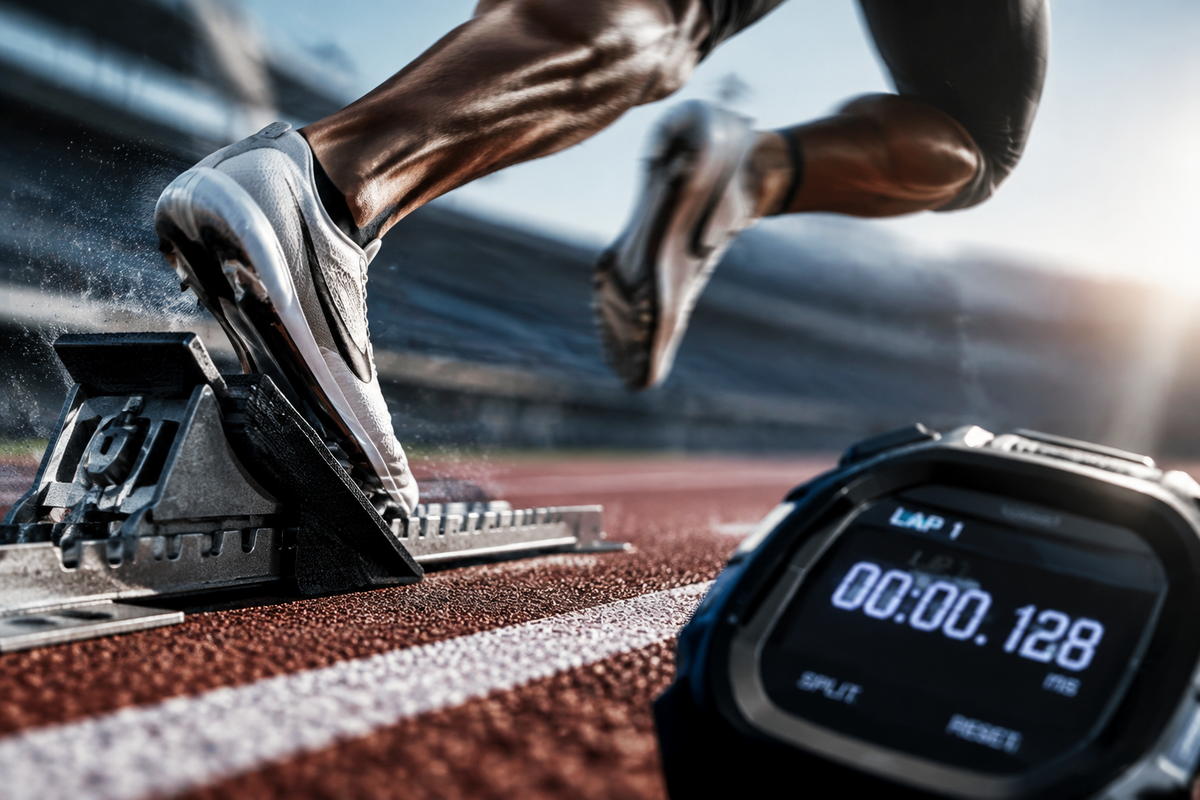
Reaction time is the interval between the appearance of a stimulus and the beginning of a response. In sport, that stimulus might be a starting signal, an opponent’s movement, a ball trajectory, a visual cue, or a coach’s command.
That is different from movement time, which is the time required to complete the physical action after movement begins. It is also different from total response time, which combines the reaction and movement phases.
This distinction matters because an athlete can recognize a cue quickly but still be slow accelerating toward the target.
1. Train simple reaction first
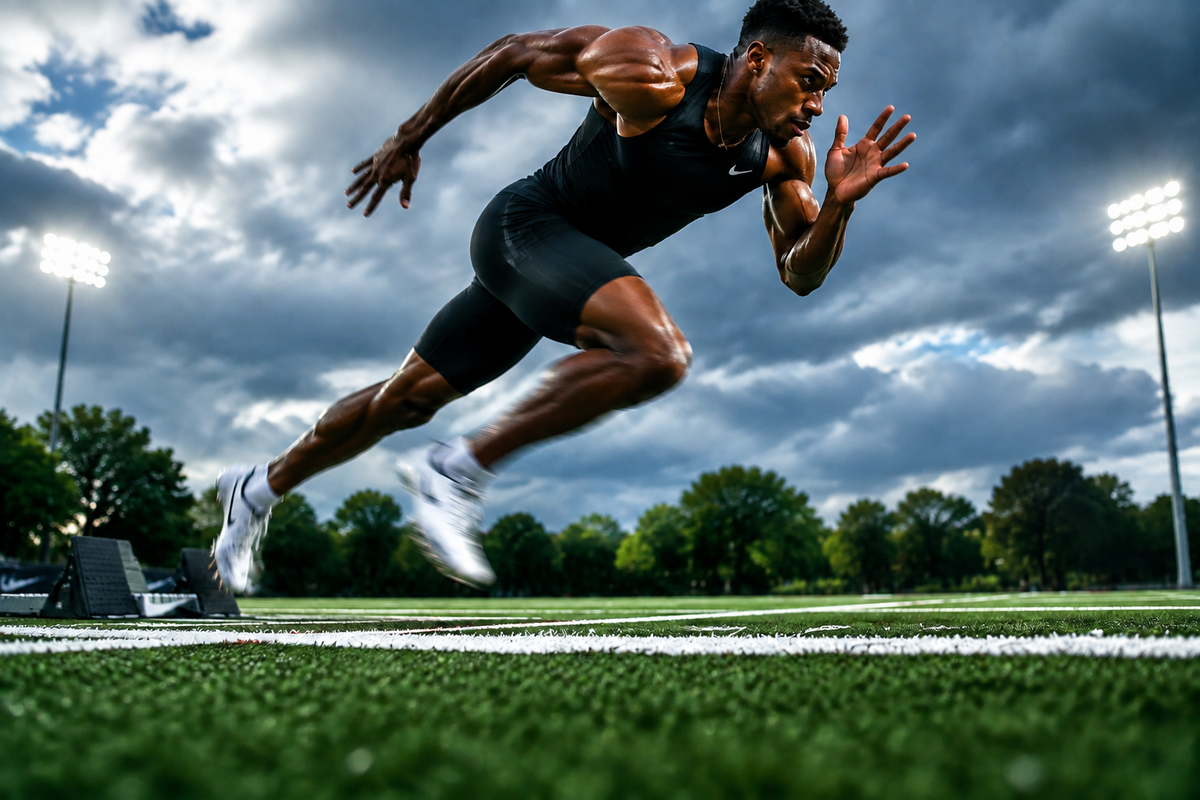
Simple reaction drills use one known stimulus and one expected response. Examples include sprinting on a whistle, moving on a light cue, or starting on a partner’s hand signal.
These drills are useful because they remove decision complexity and let the athlete focus on recognizing the cue and initiating movement quickly.
Examples
• 5–10 metre sprint on an auditory cue
• First-step drill on a visual cue
• Partner ball-drop reaction
• Randomized start-delay sprint
For sprint athletes, reaction should eventually be connected to objective timing. Freelap Canada’s guide to accurately timing a 40-yard dash explains why start method and timing method can materially affect the result.
2. Add choice reaction
Sport rarely presents one predictable answer. Choice reaction drills force the athlete to select between multiple responses.
A coach might point left or right, show one of several colours, or use an opponent’s movement to determine the athlete’s direction. This adds a decision-making component that is closer to real competition.
Useful progressions
• Two-direction visual cue
• Three-direction shuffle or sprint
• Colour cue with a different movement assigned to each colour
• Mirror drills with an opponent
• Ball or puck tracking followed by a movement response
3. Train the first step
Fast recognition does not help much if the athlete loses time during the first movement. Good reaction training should therefore include acceleration mechanics and first-step efficiency.
Useful coaching points include body position, shin angle, force direction, unnecessary false steps, and how rapidly the athlete can create horizontal force.
For athletes who need to improve sprint outcomes, the Freelap running timing systems section shows how electronic timing can be incorporated into sprint testing and training.
4. Use short, high-quality repetitions
Reaction work should be fast and intentional. Long sets can turn a speed exercise into a fatigue exercise.
Keep repetitions short enough that the athlete can respond explosively. Allow enough recovery to preserve quality. If reaction speed degrades because of fatigue, the session is no longer measuring or training the same quality.
5. Progress from predictable to sport-specific
A useful progression is:
- Known cue, known response
- Random cue, known response
- Random cue, multiple possible responses
- Opponent-driven response
- Sport-specific decision under time pressure
This helps coaches separate basic reaction skill from the more complex perception and decision demands of competition.
6. Measure whether reaction training transfers
This is where many reaction programs stop too early.
An athlete may improve on a button-tapping test without improving sprint speed, change of direction, or total movement time. Coaches should measure the performance outcome they actually care about.
For example, if the goal is a faster football start, measure a short sprint. If the goal is faster court movement, measure the time from cue to target. If the goal is better acceleration, use split times.
Electronic timing can help make those tests more repeatable than hand timing. Freelap Canada’s guide to the best electronic sports timing systems for track and field explains the role of split timing and repeatable test setup.
7. Retest under the same conditions
Reaction and sprint results are sensitive to setup. To compare sessions fairly, keep the following consistent:
- Start position
- Surface
- Footwear
- Distance
- Timing method
- Warm-up
- Recovery between trials
The goal is not merely to collect numbers. It is to create a test that can be repeated often enough to show whether training is producing a meaningful change.
How Freelap fits into reaction training
Freelap is not a reaction-light system. Its strength is measuring the movement that follows the cue.
That makes it useful when coaches want to answer questions such as:
- Did the athlete accelerate faster?
- Did the first 10 yards improve?
- Did a change in start strategy improve total time?
- Did reaction work transfer to faster movement?
For football-specific applications, see Freelap football timing systems. For sprint and running applications, browse Freelap running timing products.
FAQ
Can reaction time actually be improved?
Reaction performance can improve through practice, better anticipation, improved decision-making, and more efficient movement. The amount of improvement depends on the task and the athlete.
What is the best reaction-time exercise?
There is no single best drill. The best exercise depends on whether the athlete needs simple reaction speed, choice reaction, first-step speed, or sport-specific decision-making.
How should coaches measure reaction improvements?
Measure the performance outcome that matters in the sport. When the goal involves sprinting or movement speed, repeatable electronic timing can help track whether the athlete is actually moving faster.
Next step: Explore running timing systems or review the Freelap FAQ for setup and timing questions.

Share:
How Often Should Coaches Test Sprint Speed?
How to Build a Speed Testing Protocol for Team Sport Athletes