



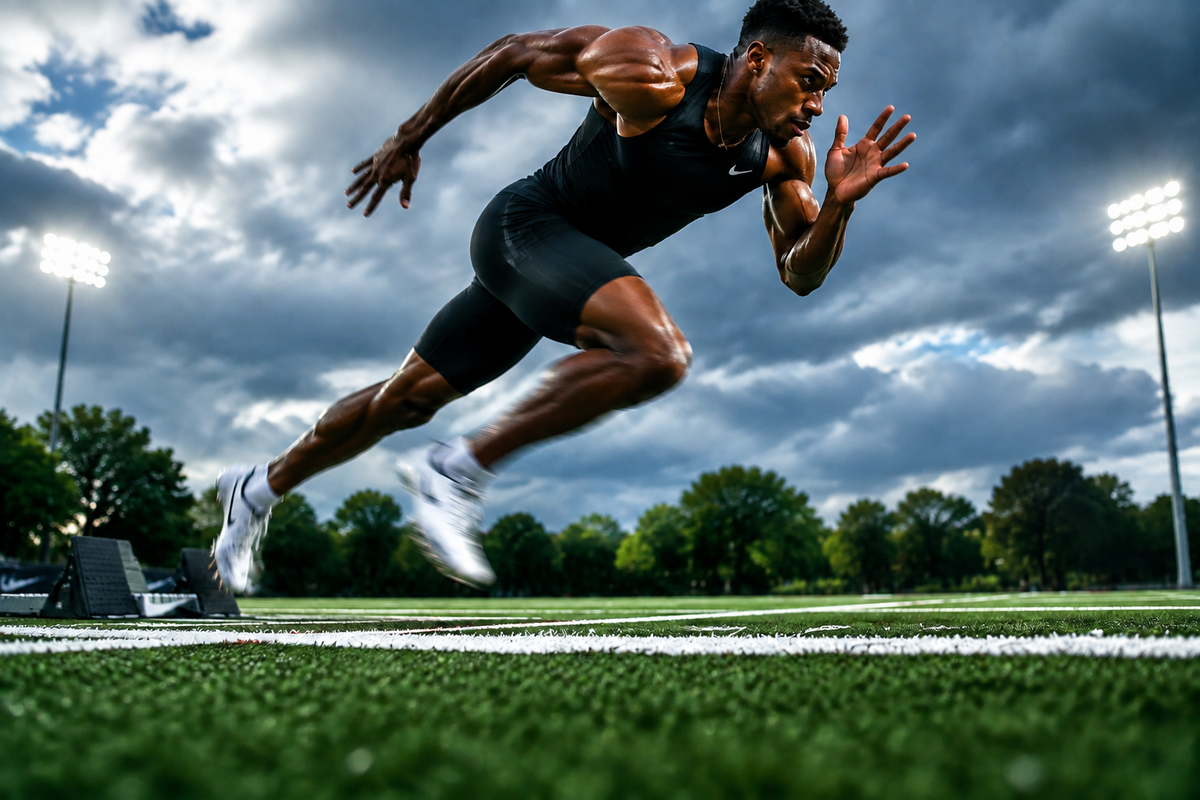
“What is a good 40-yard dash time?” sounds like a simple question. It is not.
A 40-yard result depends on who is being tested, the athlete’s age and sport, the surface, footwear, start method, and—critically—the timing method.
Before comparing one athlete’s 40 to another result, make sure the tests are actually comparable.
Why timing method changes the result
Hand timing and electronic timing do not behave the same way. A stopwatch introduces human reaction at the start and finish. Electronic timing reduces that operator variability, but the exact start method still matters.
Freelap Canada explains this in more detail in What’s the Most Accurate Way to Time a 40-Yard Dash?
Start method matters too
Was the clock triggered by first movement? A starting signal? A manual button? Was the athlete already moving before entering the first timing zone?
Those details can change the result enough that two “40-yard dash times” should not automatically be compared.
The 10-yard split may tell you more about acceleration
The first 10 yards are especially useful for evaluating early acceleration. An athlete can improve that segment without producing the same percentage improvement over the full 40.
Tracking splits helps coaches see where the performance changed rather than relying only on the final time.
What should coaches compare?
A useful hierarchy is:
1. Compare the athlete with their own previous results.
2. Use the same timing method every time.
3. Keep the start protocol consistent.
4. Compare athletes tested under the same conditions.
5. Use external benchmarks only when the testing method is truly comparable.
How many 40-yard trials should an athlete run?
Enough to get a representative result without turning the test into conditioning.
Give full recovery between maximal efforts. If performance starts falling because of fatigue, later attempts are no longer measuring the same thing.
How to make a 40-yard test more useful
• Record a 10-yard split.
• Use the same start position every session.
• Use the same surface and footwear when possible.
• Keep the timing method consistent.
• Record environmental conditions if testing outdoors.
• Retest after a meaningful training block.
Electronic timing for football testing
For football programs, a repeatable electronic setup can make it easier to compare athletes and retest progress.
See Freelap football timing systems for football-specific applications, or browse all Freelap timing products.
FAQ
Is a hand-timed 40 comparable to an electronically timed 40?
Not necessarily. Different start and finish methods can create systematic differences. Compare results only when the testing protocols are similar.
Why should coaches track the 10-yard split?
The 10-yard split provides additional information about early acceleration that the final 40-yard time cannot show on its own.
Should athletes chase one universal “good” time?
It is usually more useful to compare the athlete with a consistent baseline and with peers tested under the same protocol.
Related: Read the complete 40-yard dash timing guide or review Brower Timing vs Freelap for timing-system comparison context.

Share:
Average Reaction Time: What Is Good for an Athlete?