


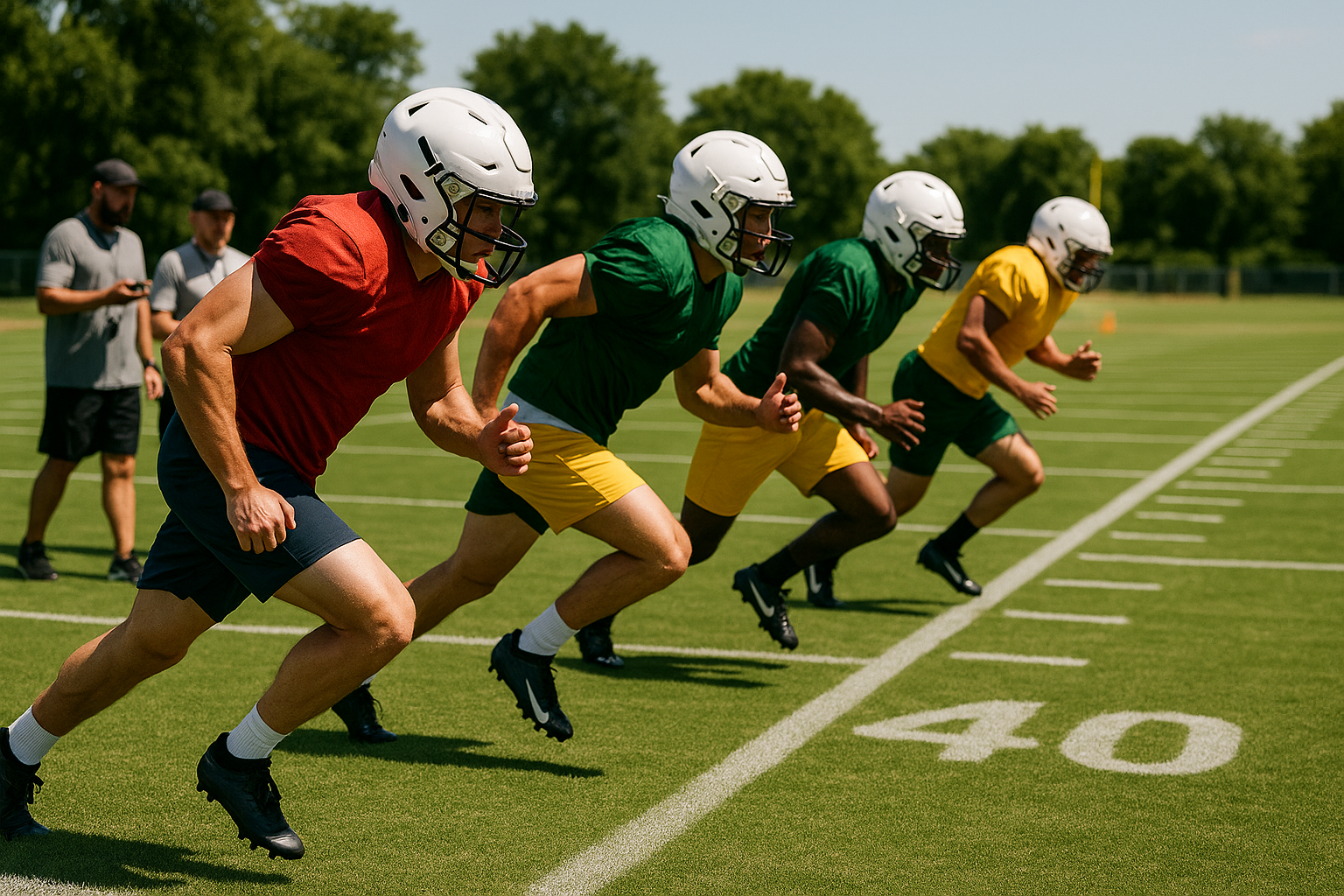
The best electronic timing system for school sports is the one that produces consistent results with minimal setup and can be used regularly by staff with limited time.
For sprint and field testing, wearable timing systems are often preferred because they reduce alignment steps and simplify workflow. For official competition timing, schools still rely on fully automated timing or chip-based systems depending on the sport.
What School programs actually need
Most school programs are not operating like professional teams. They manage:
-
Large groups of athletes.
-
Limited coaching staff.
-
Shared facilities.
-
Tight training windows.
Timing systems must fit into that reality. A system that requires constant adjustment or complex setup will not be used consistently. Consistent use is what produces useful data over a season.
Training vs competition timing
School sports require two types of timing:
-
Training and performance testing.
-
Competition and official results.
Training systems are used multiple times per week. Competition systems are used during meets. These are different tools. Trying to use one system for both usually creates limitations. schools that separate these roles tend to get better results from both.
Beam timing systems in schools
Beam-based timing systems are common because they are familiar and widely used. They can provide accurate sprint timing when:
-
Tripods are stable.
-
Beam height is consistent.
-
Setup is repeated carefully each session.
The challenge is consistency. In busy school environments, alignment steps can slow down sessions. Over time, that reduces how often the system is used.
Link → sprint timing systems page
Wearable timing systems in school environments
Wearable timing systems remove the need for beam alignment. Athletes wear a transponder, and timing points are triggered as they pass transmitters. This reduces setup time and lane interference. For schools running large sprint groups, this can make timing more practical during regular training sessions. Research on sport technology adoption shows that systems with lower setup complexity are used more consistently (McLean et al., 2020).
Building a system that holds up over a season
The value of timing comes from repeated use, not occasional testing. Systems that integrate easily into sessions tend to produce better long-term insight.
View sprint timing systems used in structured training
Budget considerations
School programs often operate within strict budgets. Timing systems should be evaluated based on:
-
Initial cost.
-
Longevity.
-
Maintenance requirements.
-
Frequency of use.
A lower-cost system that is difficult to use consistently may provide less value than a higher-cost system that becomes part of weekly training. Total value is tied to usage, not just purchase price.
Multi-sport flexibility
Many schools share timing equipment across sports:
-
Track and field.
-
Football.
-
Soccer.
-
Speed training sessions.
Systems that can be moved quickly and set up in different environments provide more value. Portable systems with minimal hardware requirements tend to fit this need better than fixed infrastructure systems.
Data use and coaching decisions
The purpose of timing in school sports is to support coaching decisions. Coaches need:
-
Clear split times.
-
Reliable comparisons across sessions.
-
Simple data access.
Research on performance measurement emphasizes that consistent data collection improves decision-making over time (Cronin & Templeton, 2011). Systems that produce clean, repeatable data support this process.
Where Freelap fits in school sports
Freelap is designed for training environments where repeatability and ease of use matter. It does not replace competition timing systems used in meets. It allows coaches to:
-
Measure sprint splits regularly.
-
Run group testing sessions.
-
Collect data without interrupting practice.
This makes it practical for schools that want to integrate timing into weekly training rather than occasional testing.
What to use for competition
For official meets, schools rely on:
-
Fully automated timing systems.
-
Photo finish systems.
-
Chip timing for larger events.
These systems are designed for ranking and official results. They are not designed for frequent training use.
Practical recommendation
For collegiate and post-secondary sports, use a system that can be set up quickly, used often, and trusted over time. Separate training timing from competition timing. Choose tools that fit staff capacity and schedule constraints. The system that is used consistently will have more impact than the one that looks best on paper.
Comparison of Timing Systems for High School Sports
|
System Type |
Ease of Use |
Setup Time |
Frequency of Use |
|
Wearable Timing Systems |
High |
Low |
High |
|
Beam Timing Systems |
Moderate |
Medium |
Moderate |
|
RFID Systems |
Low |
High |
Low (events only) |
Common Questions About School Timing Systems
-
What timing systems do high schools use for track?
-
Many use beam timing systems or wearable timing systems for training, and automated timing for meets.
-
-
Are electronic timing systems necessary for high school sports?
-
They improve consistency and reduce human error, especially in sprint testing.
-
-
What is the easiest timing system to use for schools?
-
Systems with minimal setup tend to be used more consistently in school environments. In other words; Freelap!
-


Share:
Best Electronic Timing Systems for Triathlon and Multi-Sport Events
Top Electronic Timing Systems with Mobile Apps for Live Results