



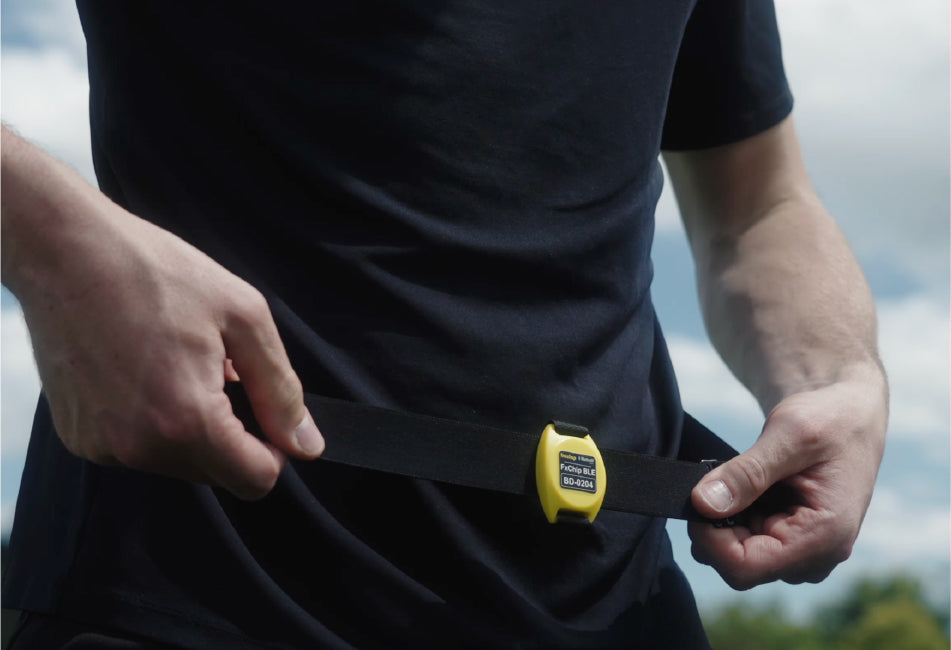
The best electronic timing systems for Canadian road races are RFID chip-based systems designed to handle large participant volumes, varied course conditions, and accurate finish results.
These systems allow race organizers to track athletes across start, split, and finish points without manual intervention. Training-focused timing systems are not designed for this scale and are typically used separately for performance development.
What Canadian road races need from a timing system
Road races in Canada range from small community runs to large-scale events with thousands of participants. Timing systems must handle:
-
Mass starts and staggered waves.
-
Accurate finish order.
-
Split timing at key course points.
-
Reliable operation in outdoor conditions.
Cold weather, uneven terrain, and variable environments make reliability a priority. Systems must function consistently without requiring constant adjustment.
Why chip timing is the standard
Chip timing systems are widely used in road races because they automate athlete identification and timing capture. Each runner carries a chip that is detected when passing timing mats placed along the course. This allows organizers to record:
-
Start time.
-
Intermediate splits.
-
Finish time.
-
Overall ranking.
Research on RFID-based timing confirms its effectiveness in large-scale sporting events where consistent detection and automated processing are required (Fister et al., 2016).
Chip timing vs gun time
Road races often distinguish between:
- Gun time, which starts when the race begins.
-
Chip time, which starts when the athlete crosses the start line.
RFID systems allow both measurements to be recorded. This is important in large races where athletes cross the start line at different times. Accurate chip timing ensures fair results regardless of starting position.
Environmental challenges in Canadian races
Canadian road races introduce specific challenges:
-
Cold temperatures affecting battery performance.
-
Wet conditions impacting equipment reliability.
-
Uneven surfaces for timing mats.
-
Variable course layouts.
RFID systems are designed to operate under these conditions when properly installed. Equipment durability and setup quality influence overall reliability.
Where other timing systems fall short
Timing systems designed for sprint testing or small group measurement do not scale to road race environments. They typically:
-
Do not support large participant volumes.
-
Do not track athlete identity across multiple checkpoints.
-
Do not integrate with race result platforms.
Using these systems in road races creates gaps in data and increases manual workload.
When comparing timing systems in practice
On paper, many systems look similar. In training, setup time and repeatability usually separate them. See how sprint timing systems are applied in track environments.
Data handling and result distribution
Road race timing systems must process large amounts of data quickly. This includes:
-
Assigning times to correct athletes.
-
Managing split data.
-
Publishing results online.
Mobile integration allows participants to view results shortly after finishing. The timing system must ensure that data is accurate before distribution.
Where Freelap fits in road race contexts
Freelap is not designed for full road race timing. It does not replace RFID chip systems used in large events. It is used in:
-
Training environments.
-
Performance testing for runners.
-
Short segment measurement.
Coaches working with distance runners may use Freelap to measure repeat efforts, pacing segments, and acceleration phases during training. Its role is in preparation, not event timing.
What determines timing reliability in road races
Reliable road race timing depends on:
-
Consistent chip detection.
-
Proper placement of timing mats.
-
Stable hardware setup.
-
Clear course segmentation.
Research across timing systems shows that setup consistency and detection reliability are the main factors influencing usable accuracy.
Practical recommendation
For Canadian road races, use RFID chip timing systems designed for large-scale events and variable outdoor conditions. For training and performance development, use systems that provide repeatable data in controlled environments. Separating these roles ensures both accuracy in competition and consistency in training.
Comparison of Timing Systems for Road Races
|
System Type |
Race Scale |
Accuracy Type |
Deployment |
|
RFID Timing Systems |
Large |
Consistent detection |
Course-wide |
|
Wearable Timing Systems |
Small |
Repeatable segments |
Training only |
|
Manual Timing |
Small |
Variable |
Limited |
Common Questions About Road Race Timing
-
How are road races timed?
-
Most use RFID chip timing systems with mats placed at the start, splits, and finish.
-
-
What is chip timing in running?
-
It records the athlete’s time from when they cross the start line to when they cross the finish line.
-
-
Are manual timing systems still used?
-
They are used in small events but are less reliable than electronic timing systems.
-


Share:
Top Electronic Timing Systems with Mobile Apps for Live Results
Electronic Timing System FAQ for Coaches