



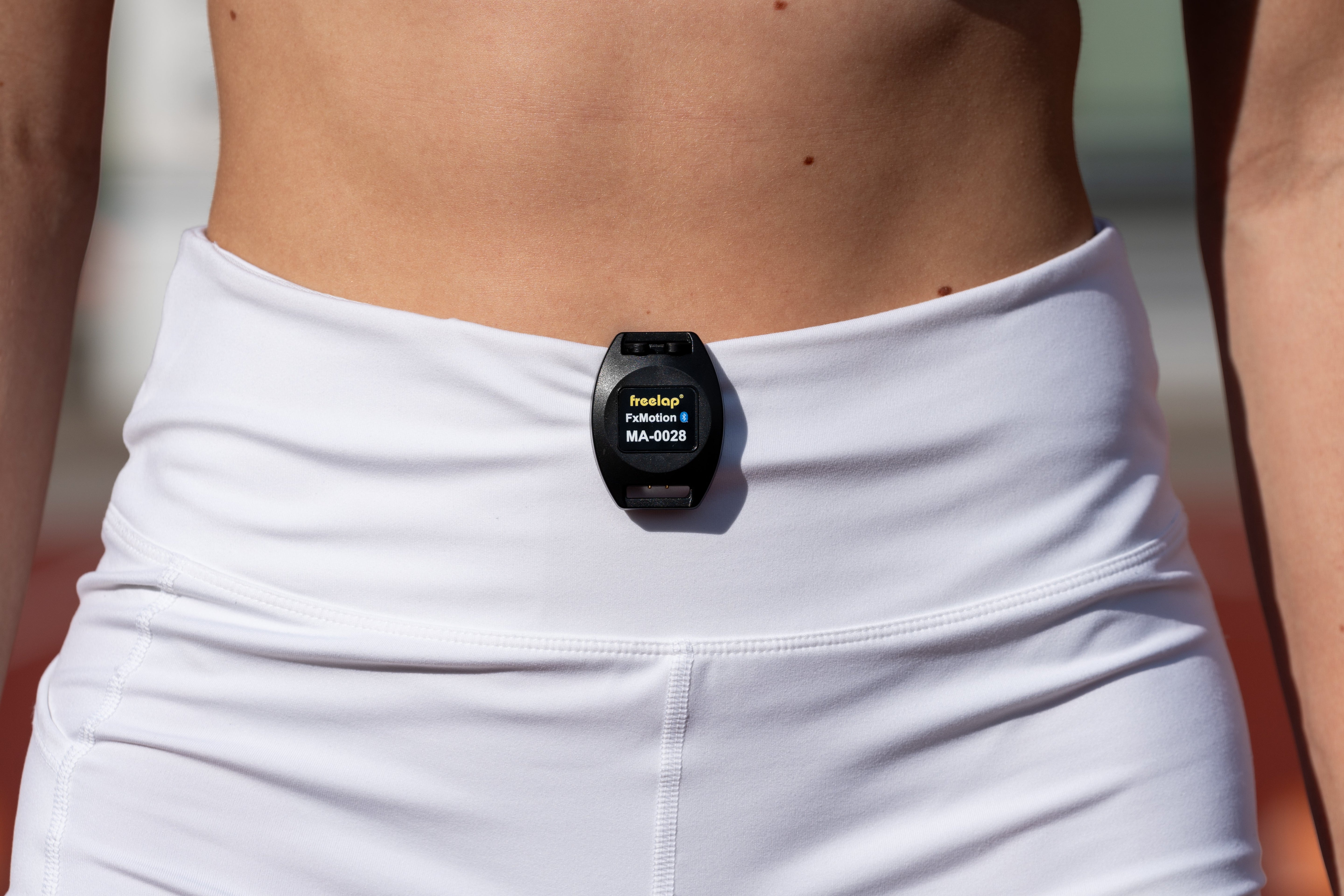
Electronic sports timing systems that support wireless sensors and real-time data are designed to reduce setup complexity while delivering immediate performance feedback.
In training environments, systems that combine wearable sensors with mobile data capture tend to produce more consistent usage because they remove alignment steps and manual data handling. In larger event environments, sensor integration often connects to broader timing infrastructure rather than replacing it.
What “wireless sensor integration” actually means
Wireless sensor integration can refer to several different technologies:
-
Wearable transponders.
-
RFID chips.
-
Inertial measurement units.
Each captures data differently. Timing systems that integrate with these sensors are not all solving the same problem. Some focus on race timing. Others focus on performance measurement. The distinction matters when choosing a system.
Real-time data vs post-session data
Real-time data allows coaches to see results immediately after a repetition. This changes how sessions are run. Athletes can adjust between reps. Coaches can confirm whether a session is producing the intended output. Research on feedback timing in sports performance shows that immediate feedback improves motor learning and performance adjustment (Wulf & Lewthwaite, 2016). Systems that delay data until after a session reduce this advantage.
RFID systems and sensor integration
RFID timing systems are often integrated into larger data environments. They can connect to:
-
Race management software.
-
Athlete databases.
-
Event timing platforms.
This is useful for large-scale events where identification and results distribution are critical. RFID integration is less focused on real-time coaching feedback and more on automated result processing.
GPS and LPS systems in team sports
GPS and local positioning systems provide movement tracking across large areas. They measure distance, speed, and positioning. They are widely used in field sports. They are not timing systems in the traditional sense. Their sampling rate and positional accuracy differ from dedicated timing systems. Studies comparing GPS tracking to timing gates show that GPS systems are less precise for short sprint measurement (Johnston et al., 2014). They serve a different purpose.
Wearable timing systems and direct data capture
Wearable timing systems designed for sprint testing combine sensor detection with immediate data transfer. A transponder detects a timing point and sends the data directly to a mobile device. This eliminates:
-
Manual data entry.
-
Post-session processing.
-
Alignment verification steps.
The result is a cleaner feedback loop. Coaches get immediate confirmation of performance without interrupting the session.
Mobile app integration
Systems that integrate with mobile apps allow coaches to:
-
View splits instantly.
-
Store session data.
-
Compare historical performance.
-
Export results when needed.
Mobile integration reduces the gap between measurement and decision. It also removes the need for separate recording tools. This aligns with the goal of reducing friction in training environments.
Link → mobile timing systems
What changes adoption in real environments
The presence of wireless sensors alone does not guarantee a system will be used consistently. Adoption depends on:
-
Setup time.
-
Reliability.
-
Clarity of data.
-
Ease of access.
Research on technology use in sport shows that systems perceived as simple and reliable are used more consistently than those with higher complexity, even when the latter offer more features (McLean et al., 2020).
What most coaches end up prioritizing
Over time, most coaches move toward systems that are easy to deploy and consistent across sessions. That’s what allows data to actually influence decisions.
Explore sprint timing systems used in training environments
https://freelapcanada.com/pages/running
Where Freelap fits in sensor-based timing
Freelap uses wearable transponders and wireless data transfer to deliver sprint splits directly to a mobile device. It does not require beam alignment or large detection infrastructure. This makes it practical for:
-
Track sprint testing.
-
Field-based training sessions.
-
Environments where setup time is limited.
The system focuses on timing accuracy through repeatable trigger points rather than layering multiple sensor types into a single platform.
What to use for different scenarios
Use RFID-integrated systems when:
-
You are managing large events.
-
You need automated athlete identification.
-
You require integration with race management software.
-
Use GPS or LPS systems when:
-
You need full-field movement tracking.
-
You are analyzing team sport patterns.
-
Use wearable timing systems when:
-
You need repeatable sprint splits.
-
You want immediate feedback during training.
-
You prioritize low setup friction.
Practical recommendation
Wireless sensor integration is useful when it supports the goal of the session. More sensors do not automatically improve decision-making. Systems that deliver clear, immediate, and repeatable timing data tend to have the greatest impact in training environments. Coaches benefit most from tools that reduce steps between measurement and action.
Comparison of Wireless Sensor-Based Timing Systems
|
System Type |
Data Type |
Real-Time Feedback |
Practical Use |
|
Wearable Timing Systems |
Split timing |
Yes |
Sprint training |
|
RFID Systems |
Identity + timing |
Partial |
Events |
|
GPS/LPS Systems |
Position and movement |
Delayed/Processed |
Team sports |
Common Questions About Wireless Timing Systems
-
What are wireless timing systems in sports?
-
They are systems that use sensors or transponders to measure performance without wired connections.
-
-
Do wireless timing systems provide real-time data?
-
Some systems provide immediate feedback, especially those designed for training environments.
-
-
Are GPS systems considered timing systems?
-
They are tracking systems. They provide movement data but are less precise for short sprint timing.
-


Share:
Freelap Canada vs Traditional Timing Systems for Cross Country Meets
Best Electronic Timing Systems for Triathlon and Multi-Sport Events