




The question most track coaches are really asking
When coaches compare Brower Timing and Freelap, they aren’t comparing brands.
They’re trying to answer:
-
Which system gives me numbers I trust?
-
Which one disrupts practice less?
-
Which one still makes sense two seasons from now?
Both systems are widely used. Both are considered legitimate. The differences show up in how they behave in real sprint environments.
How Brower timing works in practice
Brower uses traditional beam-based timing gates. A transmitter sends a beam to a reflector or receiver. When the beam is broken, the clock starts or stops.
Where Brower performs well
-
Clear lane testing environments
-
40-yard dash setups
-
Programs that already use beam alignment regularly
Beam systems are intuitive. Break the beam, trigger the clock. Simple concept.
Where friction shows up
-
Alignment sensitivity
-
Athletes clipping tripods
-
Wind or surface instability outdoors
-
Group testing logistics
Beam height also matters. Depending on placement, times can shift based on limb movement versus torso movement.
That doesn’t make it wrong. It just means the setup has to be consistent every time.
How Freelap works differently
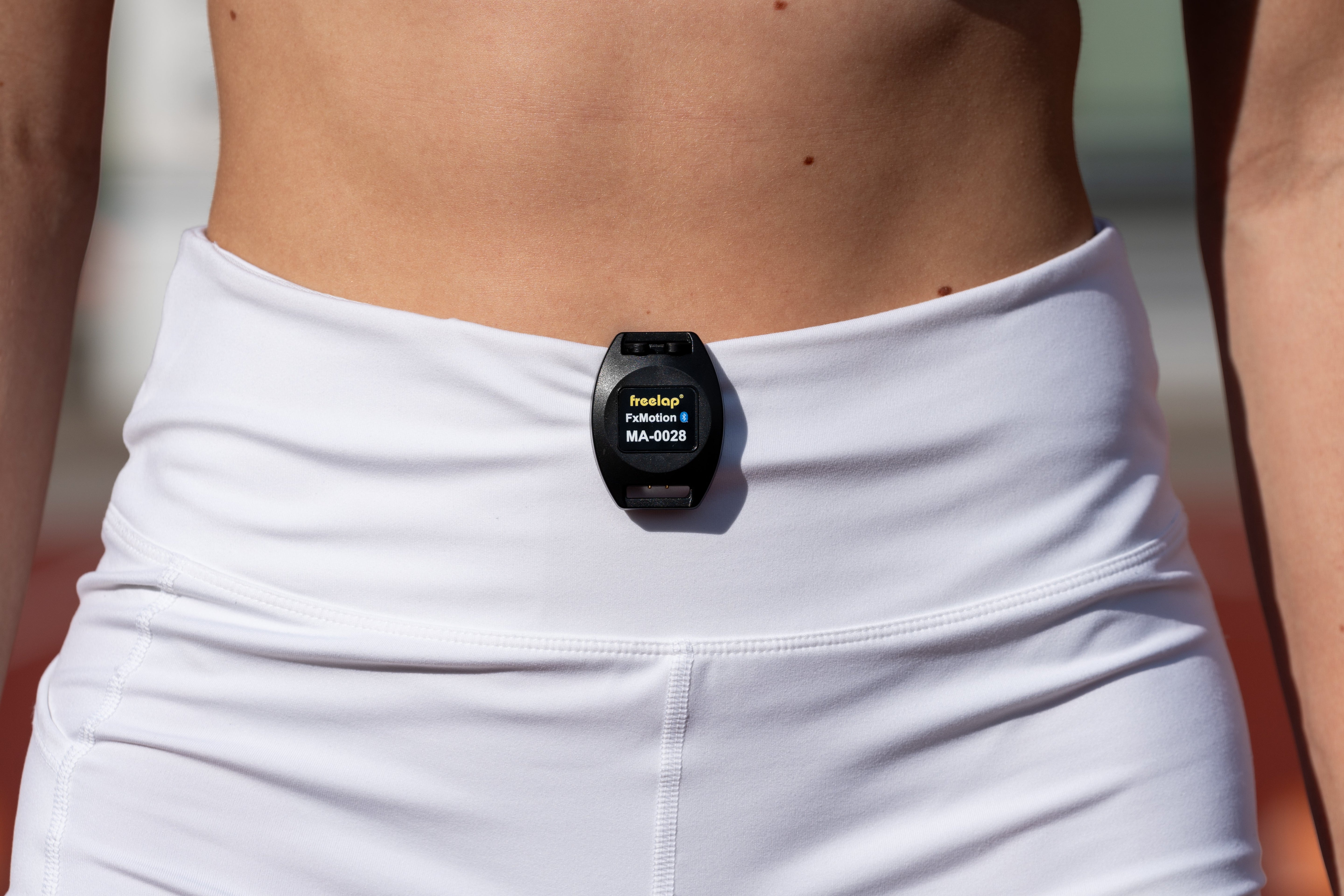
Freelap uses wearable transponders and magnetic timing transmitters instead of beam interruption.
The chip detects magnetic fields at start and split points.
What that changes
-
No beam alignment
-
No false triggers from arm swings
-
No tripods in lanes
-
Faster multi-athlete setup
For track environments, especially outdoor sprint sessions, that reduction in physical setup can matter more than coaches expect.
Center of mass timing vs beam break timing
One of the biggest differences between beam systems and chip-based systems is what physically triggers the time.
Beam systems
Timing stops when any body part breaks the beam.
Wearable chip systems
Timing triggers when the chip passes the transmitter field.
This affects repeatability more than headline accuracy numbers.
For sprint coaches tracking 10m splits, flying 30s, and block exits, repeatability is often more valuable than theoretical millisecond precision.
Outdoor track reality
Track coaches deal with:
-
Wind
-
Uneven surfaces
-
Large groups
-
Limited session time
Beam systems require careful alignment each session. In controlled environments, that’s manageable. In busy high school or collegiate settings, friction accumulates.
Wearable systems reduce physical alignment steps but require athlete compliance with wearing chips properly.
Group sprint testing
Testing 2–3 athletes is different from testing 15.
Beam systems often require resetting and checking alignment between reps.
Wearable systems allow multiple athletes to cycle through transmitters without lane hardware adjustments.
For programs running large sprint groups, that difference compounds over a season.
Cost structure considerations
Brower systems are typically hardware-centric purchases.
Freelap systems scale with additional transmitters and chips.
Neither is inherently cheaper long term. The cost depends on:
-
How many athletes you test simultaneously
-
How often you expand testing distances
-
Whether you prioritize simplicity or beam-based control
Which system fits which track coach?
Brower may fit better if:
-
You already run beam timing consistently
-
You value visible lane hardware
-
You operate in controlled indoor spaces
Freelap may fit better if:
-
You test outdoors frequently
-
You run large sprint groups
-
You want minimal physical setup in lanes
-
You prioritize repeatability across sessions
The decision underneath the comparison
This isn’t about which company is “better.”
It’s about how you want sprint testing to function inside your program.
Beam-based systems reward precision setup. Wearable systems reward reduced friction.
Track coaches who test frequently tend to value the system that disappears into the background.
The one that stays in use is the one that wins.


Share:
What’s the Best Way to Test Acceleration in Soccer Players?
Why Different Timing Systems Produce Different Sprint Times